

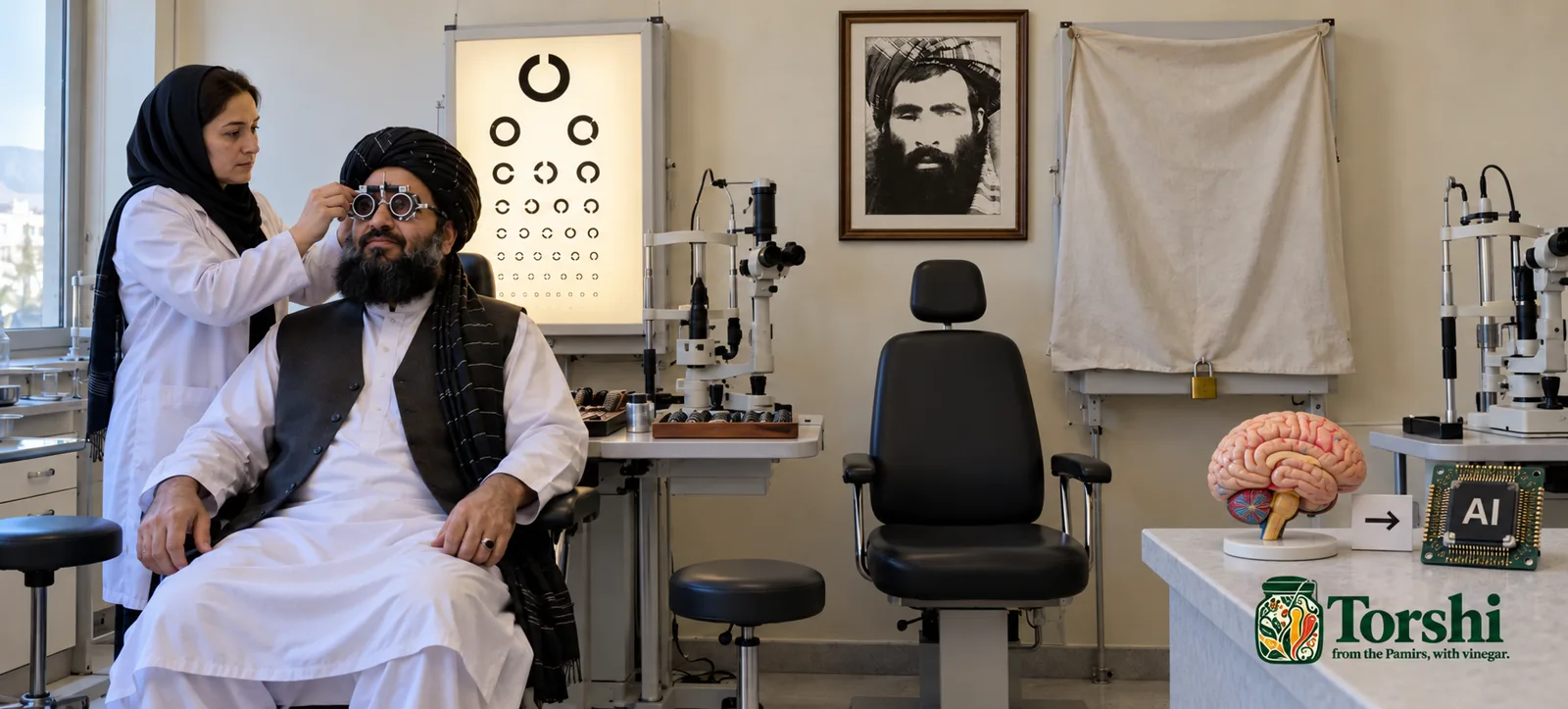
KABUL—The Islamic Emirate restricted corneal transplants after discovering restored eyesight could expose Afghans to five years of government achievements invisible to the naked eye.
“Sight creates doubt,” Zabihullah Mujahid explained. “A blind man hears we built a prosperous nation. A sighted man asks where it is.”
Doctors were instructed to replace damaged corneas with prayer, patience and televised descriptions of progress. Patients seeking surgery must accept responsibility for whatever Afghanistan looks like afterward.
Amirul Momineen Hibatullah hailed a breakthrough in Islamic ophthalmology. “Mullah Omar governed with one eye. We improved his model by removing the other.”
Officials said the policy would eliminate dangerous sights, including empty girls' classrooms, unemployed graduates and ministers encountering journalists.
Senior Taliban officials were exempted and permitted treatment abroad. “Leadership requires excellent vision,” journalist Ali Latifi explained. “Someone must see what the public is forbidden to.”
Kandahar unveiled its next breakthrough: replacing Afghan brains with AI chips, locally developed under the Ministry of Artificial Islam, programmed to obey decrees, erase forty years of massacres and interpret starvation as prosperity.
Hibatullah approved the technology after engineers confirmed it could finally produce the ideal Afghan citizen: alive enough to obey, dead enough not to think.